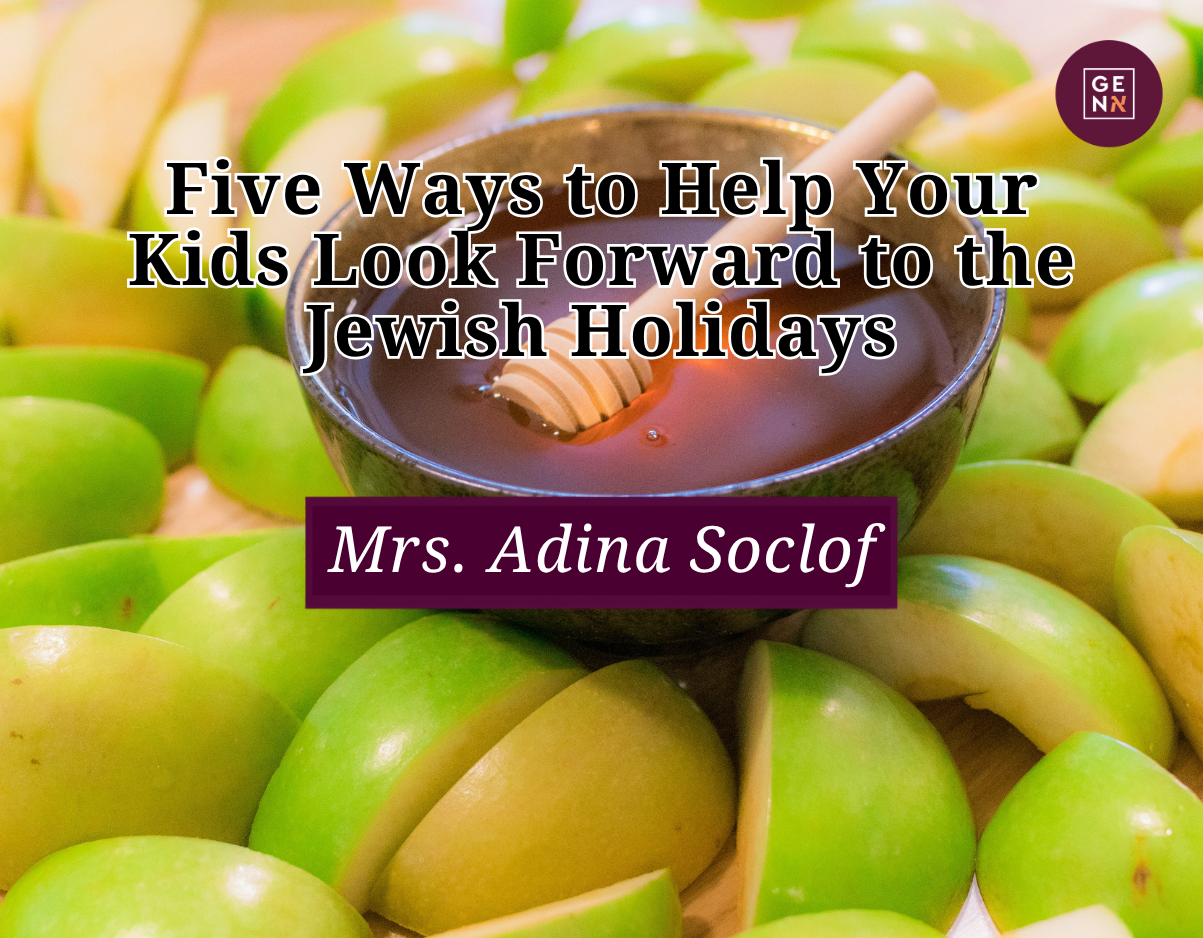
The Jewish holidays are right around the corner. Between cooking, cleaning, hosting, and building the sukkah, it’s easy to get swept up in the preparations—and forget that we want our kids looking forward to the holidays too, not just surviving them alongside us.
Here are five ways we can make that happen:
1. Don’t Complain
The Jewish holidays are pretty intense, and so are the preparations. Cooking, hosting family, building the sukkah, and adjusting our work schedules can be tough. Try not to let it get you down. Try to talk about it with excitement instead of dread.
Instead of: “I can’t believe I have to spend the whole meal with Aunt Millie again!” Try: “I’m so glad your cousins are coming to visit! Cousins are the best!”
Instead of: “There is so much to do! I don’t know how I’m going to manage!” Try: “There is so much to do! We manage every year, and we’ll do it again this year!”
2. Get the Kids Involved
Children love being part of the holiday preparations. It makes them feel important and builds a sense of responsibility. Ask your kids what they learned about the holiday, and what they’d like to help prepare:
“I’m so glad you learned all about dipping the apple in the honey. We’re going to need someone in charge of putting the honey and apples on the table—can that be you?”
For older kids, we definitely want and need their help—and they’re much more willing to give it when we ask for their input, not just their labor.
“We have 20 people coming for our Sukkah meal. Do you remember what you made last year that everyone loved? Is there anything you’d like to make again this year?”
3. It’s All About the Food
With all the talk these days about health and clean eating, we’re all a little more conscious of what goes into our mouths. But the holidays are a good time to let that go for a bit and indulge. There really is nothing like Jewish food.
Most of our happiest holiday memories revolve around food: “Remember Bubbie’s amazing rugelach?” “I just love my mom’s tzimmes!” Invite the grandparents to bring their signature recipes—and it’s even better if they cook the dishes they remember their own parents and grandparents making. That way, every generation at the table gets to enjoy it together.
There’s something deeply nostalgic about food. It often opens the door to stories about parents and grandparents long gone, and kids tend to love hearing about what their parents and grandparents were like as kids themselves. (Especially how they somehow survived without cell phones!)
This is also a great time to start building your own food traditions with your own children—the ones they’ll be telling their kids about one day.
4. Listen to Your Kids
Children might have some genuinely negative feelings about the upcoming holidays:
“You’re so busy, you have no time for me!” “I hate sitting in shul for so long—it’s boring!”
Take their complaints seriously instead of brushing them off:
“You need more time with me? Let’s figure out a way to make that happen. Would you want to help me in the kitchen? That way we get things done and spend time together.”
“Let’s figure out something that could make shul feel less tedious for you. Could you bring an appropriate book along, for when it starts to feel like too much?”
You can always ask them directly: “What do you think would work best for you?”
5. Prayer
The High Holidays revolve very much around prayer and shul. It’s a time to pray for your family and their well-being—and also to pray that they find meaning, love, and real excitement in their Judaism, this year and every year after.
Submit your questions
"*" indicates required fields